



OGEDENGBE AGBOGUNGBORO LEGACY: LEADERSHIP, SECURITY AND STATECRAFT FOR MODERN GOVERNANCE IN NIGERIA
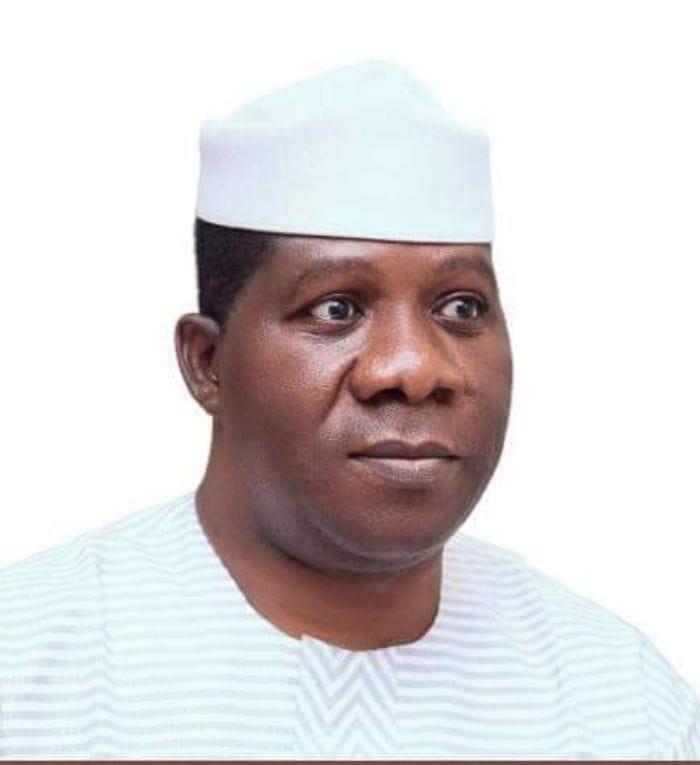
By Senator Michael Opeyemi Bamidele, CON
Leader of the Senate
On the occasion of the 116th Anniversary of Ogedengbe Agbogungboro at Owa Obokun Civic Center, Ereja Square, Ilesa Osun State on July 31,2026.
PROTOCOL
His Excellency, Chief Olusegun Obasanjo, GCFR, Former President of the Federal Republic of Nigeria;
Aare Emmanuel Afe Babalola, SAN, OFR, CON, Founder and Chancellor of Afe Babalola University, Ado-Ekiti (ABUAD), ably represented by Professor Olasupo Ijabadeniyi, Deputy Vice-Chancellor (Administration), ABUAD;
His Excellency, Senator Ademola Adeleke, Executive Governor of Osun State;
His Imperial Majesty, Oba Clement Adesuyi Haastrup, Ajimoko III, the Owa Obokun of Ijesaland and Paramount Ruler of Ijesaland, our gracious Royal Host;
His Royal Majesty, Oba Ghandi Afolabi Olaoye, Orumogege III, the Soun of Ogbomosoland;
Distinguished Traditional Rulers;
Eminent Scholars;
Top Functionaries of Government and Public Service;
Honourable Members of the National and State Assemblies;
Members of the Diplomatic Corps;
Captains of Industry;
Ladies and Gentlemen,
It is with profound gratitude and an abiding sense of duty that I stand before this distinguished gathering to commemorate with you the enduring legacy of one of Africa’s greatest military strategists, patriots, and nation-builders—Ogedengbe Agbogungboro of Ijesaland, the legendary Commander of the Ekiti-Parapo Confederacy during the historic Kiriji War.
Today, we gather not merely to celebrate an accomplished warrior, but to honour a visionary statesman whose courage, strategic foresight, diplomacy, and unwavering commitment to justice continue to offer enduring lessons for leadership and nation-building in contemporary Nigeria.
We are equally privileged to celebrate an illustrious patriot of our own time, Aare Emmanuel Afe Babalola, SAN, OFR, CON, whose extraordinary contributions to legal practice, education, philanthropy, healthcare, agriculture, and national development represent the living continuation of the ideals exemplified by Ogedengbe Agbogungboro. His life’s work demonstrates that the greatest tribute we can pay to our heroes is to embody the values for which they lived and sacrificed.
INTRODUCTION
Great nations are built not only upon abundant natural resources or economic prosperity but also upon their ability to preserve the memories and ideals of the men and women whose sacrifices shaped their history.
Nigeria today faces formidable challenges. Terrorism, banditry, kidnapping, separatist agitations, youth unemployment, institutional weaknesses, declining public trust, and widespread insecurity continue to test the resilience of our democracy. Yet, history reminds us that every generation encounters defining moments that demand exceptional leadership, courage, and vision.
The story of Ogedengbe Agbogungboro therefore extends far beyond military history. His remarkable life offers timeless lessons in leadership, national security, coalition building, strategic planning, conflict resolution, diplomacy, and responsible governance. His legacy demonstrates that enduring leadership is measured not merely by victories won on the battlefield, but by the institutions strengthened, the people united, and the values preserved for posterity.
The thematic content of this lecture is straightforward, and yet profound: Nigeria’s future can be strengthened by rediscovering and applying the leadership principles embodied by our indigenous heroes. As the stirring words of our former National Anthem remind us:
“The labour of our heroes past shall never be in vain.”
Those words are more than patriotic poetry; they constitute a solemn national obligation. They challenge every generation to preserve our historical heritage while building a more secure, united, and prosperous nation.
WHO WAS OGEDENGBE AGBOGUNGBORO?
Saraibi Ogedengbe, more widely celebrated as Ogedengbe Agbogungboro, was born as Orisarayibi Ogundamola around 1822 to Pa Apasan Borijiwa and Madam Ojuola Orisatomi Falupo at Atorin, a settlement situated about twenty kilometres from Ilesa in present-day Atakunmosa East Local Government Area of Osun State.
He emerged as one of the most accomplished military commanders of the nineteenth-century Yorubaland during one of the most turbulent periods in Yoruba history following the collapse of the Old Oyo Empire.
As Commander-in-Chief of the Ekiti-Parapo Confederacy throughout the historic Kiriji War (1877–1893), Ogedengbe distinguished himself through extraordinary courage, military brilliance, strategic foresight, diplomatic dexterity, and exceptional organisational ability. He successfully united diverse communities in pursuit of a common objective—the defence of their freedom, dignity, and collective security.
Yet, Ogedengbe’s greatness did not rest solely upon his achievements on the battlefield. He understood a timeless truth: military victory without political stability, justice, and reconciliation cannot guarantee lasting peace.
Consequently, he emerged not merely as a fearless warrior, but as a defender of his people, a liberator of oppressed communities, a skilled diplomat, and an accomplished statesman.
His campaigns were inspired not by conquest or personal ambition, but by the pursuit of justice, collective security, and the preservation of the political independence of Yoruba communities.
The title “Agbogungboro”, literally interpreted as “the great warrior whose exploits resound across the battlefield,” became synonymous with courage, resilience, strategic brilliance, and selfless service. More than a century after his passing, Ogedengbe remains an enduring symbol of visionary leadership, patriotic sacrifice, and unwavering commitment to the common good.
His legacy continues to remind us that authentic leadership is founded not on the pursuit of power, but on the willingness to serve, protect, unite, and inspire generations yet unborn.
LEADERSHIP LESSONS FROM OGEDENGBE AGBOGUNGBORO
The life and legacy of Ogedengbe Agbogungboro present enduring lessons for contemporary leadership. Although separated from our time by more than a century, the principles that defined his leadership remain profoundly relevant to the challenges confronting modern Nigeria.
The first lesson is courage.
True leadership demands moral courage before physical bravery. It requires the conviction to make difficult decisions, defend what is right, and remain steadfast even when the path ahead is uncertain.
Ogedengbe consistently accepted daunting responsibilities at moments when success appeared improbable and defeat seemed imminent. Yet, he never retreated from duty. His courage inspired confidence among his followers and transformed adversity into collective resolve.
Our democratic institutions require the same quality of leadership today. Political leaders must possess the courage to implement reforms that may be difficult or unpopular in the short term but are indispensable for national stability, economic progress, and the long-term welfare of the Nigerian people.
The second lesson is integrity.
Ogedengbe commanded loyalty because his words were matched by his actions. His followers trusted him because he led by personal example, stood for integrity, upheld his commitments, and demonstrated consistency in both character and conduct.
Trust remains the greatest currency of leadership. Without public confidence, institutions gradually lose legitimacy, governance becomes ineffective, and democracy itself is weakened. Sustainable leadership is therefore built not upon power alone but upon credibility, accountability, and ethical conduct.
The third lesson is shared leadership and coalition building.
Despite his enormous military influence, Ogedengbe did not seek personal domination. Instead, he united diverse kingdoms, communities, and leaders under the common cause of collective security and mutual liberation. He understood that enduring victories are achieved through partnership rather than personal ambition.
Modern Nigeria requires the same collaborative spirit. Our progress depends upon constructive engagement across political parties, ethnic nationalities, religious communities, traditional institutions, civil society organizations, and the private sector. Nation-building is a shared responsibility, and our diversity must remain a source of strength rather than division.
SECURITY AS A COLLECTIVE RESPONSIBILITY
Among the most enduring lessons from Ogedengbe’s life is his understanding that security is a collective responsibility.
The complex security challenges confronting Nigeria today—including terrorism, banditry, kidnapping, violent extremism, and communal conflicts—cannot be addressed solely through military force. They require a comprehensive security architecture rooted in intelligence, prevention, community participation, and institutional collaboration.
Ogedengbe appreciated this reality centuries ago. He recognized that lasting security depended upon effective intelligence gathering, strong community support, resilient local institutions, mutual trust, disciplined coordination, and a shared commitment to the common good. His approach remains remarkably relevant to contemporary security thinking.
For those who seek a deeper understanding of this remarkable period in Yoruba history, I recommend the enduring historical account by Reverend Samuel Johnson in ‘The History of the Yorubas” As an Anglican clergyman, historian, diplomat, and peace advocate, Johnson documented the Kiriji War with remarkable insight, preserving for posterity one of the most significant chapters in Yoruba political and military history.
History consistently demonstrates that successful security systems combine strong national institutions with active community ownership. Security cannot be outsourced entirely to Government agencies; it must become the collective responsibility of Government, traditional institutions, community leaders, and citizens alike.
As Leader of the Senate, it is my great pleasure to assure you all that the 10th Senate remains committed to supporting legislative measures that strengthen policing, enhance intelligence coordination, improve the welfare of our Armed Forces and other security agencies, and we shall continue to promote comprehensive institutional reforms necessary for a safer Nigeria.
Yet legislation alone cannot secure a nation.
Citizens must become active partners in safeguarding their communities by promoting vigilance, gathering relevant security information and conveying them to appropriate law enforcement agencies, strengthening neighbourhood cooperation, supporting lawful security initiatives, and embracing dialogue as an instrument for conflict prevention and sustainable peace.
Traditional institutions likewise remain indispensable partners in our national security architecture. Their historical legitimacy, moral authority, and close relationship with local communities position them uniquely for intelligence gathering, mediation, conflict prevention, and the strengthening of community policing initiatives.
A secure nation is ultimately built upon trust, cooperation, justice, and shared responsibility.
STATECRAFT AND RESPONSIBLE GOVERNANCE
Statecraft transcends the pursuit of political power.
It is the art of wisely managing people, institutions, resources, and national diversity in a manner that advances the common good while preserving justice, peace, and stability.
Historical accounts and enduring oral traditions alike attest to Ogedengbe Agbogungboro’s exceptional diplomatic skill throughout the protracted Kiriji War. Beyond his reputation as a fearless military commander, he understood the value of negotiation, the importance of strategic alliances, and the necessity of restraint in moments of conflict. He recognized that military victories alone could not guarantee enduring peace. Sustainable peace required dialogue, reconciliation, and responsible leadership. These principles remain fundamental to democratic governance today.
Nigeria’s leaders must continue to embrace dialogue over confrontation, consensus over division, national interest over sectional or personal ambition, and public service over political advantage.
The essence of statesmanship lies not in the acquisition of power but in the wise, selfless, and principled exercise of authority for the benefit of present and future generations.
THE ROLE OF EDUCATION IN NATION BUILDING
As we honour Aare Emmanuel Afe Babalola, SAN, OFR, CON, we celebrate one of Nigeria’s finest examples of visionary and transformational leadership.
Through the establishment of Afe Babalola University, Ado-Ekiti (ABUAD), he has demonstrated that private vision, guided by patriotism, discipline, and excellence, can become a powerful instrument of national transformation. His life’s philosophy—captured eloquently in his autobiography, Impossible? Made Possible—stands as an enduring testament to the limitless possibilities of determination, integrity, and purposeful leadership.
His contributions extend far beyond education.
Through the Afe Babalola Multi-System Hospital, he has established one of Africa’s most advanced privately funded healthcare institutions, expanding access to world-class medical services while contributing significantly to healthcare development south of the Sahara.
His investments in education, agriculture, healthcare, legal development, entrepreneurship, scientific research, and human capital development demonstrate a lifelong commitment to nation-building through institution building.
His remarkable career reminds us that true patriotism is measured not merely by political office but by the enduring institutions we establish and the opportunities we create for future generations. It isHistory remembers builders because builders create lasting legacies.
For these reasons, Aare Afe Babalola deserves recognition not only as an accomplished legal luminary and educationist but also as one of Nigeria’s living national treasures.
THE FABUNMI CONNECTION
History equally reminds us that no great leader succeeds in isolation.
Among the most distinguished commanders of the Ekiti-Parapo Confederacy was the renowned Prince Fabunmi Adesoye Oraralada of Okemesi-Ekiti, whose courage, strategic leadership, and unwavering commitment to the liberation of Ekiti and allied communities played a defining role in the eventual success of the Kiriji campaign.
His close partnership with Ogedengbe Agbogungboro exemplified the enduring values of loyalty, discipline, mutual trust, and coordinated leadership. Together, they demonstrated that collective purpose is always greater than individual ambition. It is therefore profoundly significant that Aare Emmanuel Afe Babalola bears the revered title of Arole Fabunmi of Okemesi-Ekiti.
That distinction represents far more than ancestry or traditional honour. It symbolizes the continuity of a noble legacy that links historical sacrifice with contemporary nation-building. It affirms that every generation inherits not only the privileges of its heroes but also the responsibility to preserve and extend their achievements.
While Ogedengbe Agbogungboro, Fabunmi of Okemesi-Ekiti, and their compatriots secured the freedom of their people through courage and military heroism during the nineteenth century, Aare Afe Babalola and many distinguished Ekiti patriots advanced the creation of modern Ekiti State through intellectual leadership, legal advocacy, strategic engagement, and national goodwill.
Separated by more than a century, both generations were united by a common purpose—the advancement of their people and the strengthening of society through sacrifice, vision, and selfless service. For these enduring contributions, history will continue to honour their names, and succeeding generations will forever remain indebted to the remarkable legacies they have bequeathed to our nation.
LESSONS FOR THE NATIONAL ASSEMBLY
As Leader of the Senate, I remain firmly convinced that democratic institutions must continually evolve to respond effectively to the realities and aspirations of our time. The National Assembly bears a profound constitutional responsibility to strengthen Nigeria’s democracy through quality legislation, effective oversight, fiscal accountability, constitutional reform, and faithful representation of the Nigerian people. These responsibilities demand not only political competence but also patriotism, courage, integrity, and a steadfast commitment to the national interest.
The legacy of Ogedengbe Agbogungboro offers enduring guidance for public service. Like Orisarayibi Ogedengbe, our commitment must always be to the stability, unity, and security of our nation. Like Ogedengbe Agbogungboro, we must build bridges across political, ethnic, religious, and regional divides in the pursuit of a stronger and more united Nigeria. Like the fearless Abijawara, celebrated in Yoruba tradition as “Àtì pọn-pọn lójú ogun”—the warrior who remained undaunted in the face of battle—we must demonstrate courage in confronting the difficult challenges of governance and always place national unity above sectional or personal interests.
Ogedengbe lives on—not merely in the pages of history or in the rich oral traditions of Ijesaland, but in the resilient spirit of every Nigerian who refuses to surrender to adversity and remains committed to justice, freedom, and the common good.
Ultimately, it is instructive to note that history will judge our generation not by the eloquence of our speeches, but by the strength of the institutions we build, the reforms we implement, and the enduring legacy we leave for generations yet unborn.
THE YOUTH AND THE FUTURE
Nigeria’s greatest strategic asset is neither its mineral wealth nor its vast natural resources. It is the energy, creativity, and resilience of its youthful population.
Yet this immense demographic advantage is threatened by insecurity, unemployment, inadequate educational opportunities, poverty, and growing social disillusionment.
Our young people deserve more than promises; they deserve hope, opportunity, and inspiring examples worthy of emulation.
In Ogedengbe Agbogungboro, they find the virtues of courage, resilience, patriotism, and selfless sacrifice.
In Aare Emmanuel Afe Babalola, they encounter a living testament to excellence, discipline, vision, enterprise, and national service.
Together, these two distinguished figures—one a towering hero of history, the other an outstanding patriot of our own generation—illustrate that greatness is achieved through character, perseverance, service, and an unwavering commitment to humanity.
Government at every level, must therefore, continue to invest strategically in quality education, digital innovation, entrepreneurship, agriculture, technology, scientific research, and vocational skills development. These investments are indispensable to national prosperity and sustainable development.
A secure nation begins with empowered and hopeful young people.
I am particularly delighted to learn from the organizers of Ogedengbe Fiesta 2026 that the proceeds from this year’s celebration will be dedicated to the establishment of the Ogedengbe Museum and ICT Centre. This visionary initiative will preserve our rich historical heritage while equipping future generations with the knowledge and technological skills required to thrive in an increasingly digital and knowledge-driven world.
It is a fitting tribute to a hero whose legacy continues to illuminate the path of progress.
CONCLUSION
Nations do not attain greatness merely because they are endowed with abundant natural resources. They become great because successive generations choose to preserve the values bequeathed by their heroes while courageously confronting the challenges of their own age.
Ogedengbe Agbogungboro fought the battles of his generation with the sword, the musket, and the famous Kiriji gun. Our generation is called to wage different battles—against insecurity, corruption, poverty, ignorance, injustice, and national disunity. These battles can only be won through visionary leadership, strong institutions, responsible citizenship, and an unwavering commitment to the rule of law.
History offers every nation a mirror through which it examines both its past and its future. Within that mirror stand extraordinary men and women whose lives illuminate the path forward. Ogedengbe Agbogungboro is unquestionably one of those towering figures.
His legacy teaches us that leadership demands courage.
Security demands cooperation.
Statecraft demands wisdom.
Justice demands integrity.
And national development demands sacrifice.
As we commemorate the 116th anniversary of this remarkable son of Ijesaland, let us renew our collective commitment to building a Nigeria founded upon justice, peace, accountable leadership, national unity, and strong democratic institutions. It is on this note that I implore our State Governments, State Houses of Assembly, Traditional Rulers, Religious Institutions, The Academia and Community Leaders to support the ongoing constitutional process towards the creation of State Police in Nigeria. It is long overdue in view of the prevailing security realities of our great nation and a stitch in time saves nine. Let us build a national consensus that transcend ethnic, religious and political cleavages, in support of State Policing in Nigeria, in the ultimate interest of national security, justice, peace, unity and prosperity.
As we honour Aare Emmanuel Afe Babalola, SAN, OFR, CON, we celebrate the inspiring truth that one individual, guided by vision, discipline, integrity, and patriotism, can transform generations through education, philanthropy, and institution building.
May the courage of Ogedengbe continue to inspire our leaders.
May the accomplishments of Aare Afe Babalola continue to inspire our youth.
May Nigeria continue to grow in unity, peace, security, justice, and prosperity.
It is a remarkable personal coincidence that I was born exactly fifty-three years after the passing of the legendary Ogedengbe Agbogungboro, both events occurring on the 29th of July. I have always regarded this coincidence not as an act of destiny, but as a constant reminder that every generation bears a solemn responsibility to preserve the legacies of its heroes and to advance the noble ideals for which they lived.
Among the Ijesa people, it is often said:
«”Ọjọ́ tí Ogedengbe kú, Ọlọ́run yán ìbọn.”»
“On the day Ogedengbe died, God Himself fired the gun across the heavens.”
This poetic expression captures the reverence with which generations have remembered a warrior whose courage transcended his own lifetime and became part of the collective memory of a people.
May future generations remember that we assembled here today not merely to celebrate the memory of a great warrior, but to renew our collective commitment to the enduring ideals for which he stood—courage, justice, unity, sacrifice, service, and patriotism.
I warmly congratulate the organizers of Ogedengbe Fiesta 2026 for their vision and dedication in preserving this invaluable cultural and historical heritage. I also commend everyone who has travelled from near and far to participate in this celebration of one of Nigeria’s greatest sons.
To the Ogedengbe family of Ijesaland, may the noble spirit of your illustrious ancestor continue to guide and strengthen you.
Àbá rìn in à gbe hìn ooo.
Let us also remember the immortal praise poetry of the great warrior:
“Ogedengbe Agbogungboro
Ó lè Yàgbà gòkè Ìwòrì
Ó lè rà Ìdòàní gò rí òkun
Ó sọ́kò Ekiti, ó sọ́kò Akoko
Ẹni Akoko ń bí ọmọ sílẹ̀ lẹ́sẹ̀ Òkè.”
May the immortal legacy of Ogedengbe Agbogungboro continue to inspire our nation for generations to come.
To our distinguished honouree, Aare Emmanuel Afe Babalola, SAN, OFR, CON, the revered Arole Fabunmi of Okemesi-Ekiti, we pray that Almighty God grants you many more years of sound health, wisdom, strength, and fulfilment as you continue your extraordinary service to humanity and our great nation.
Thank you for your gracious attention.
May Almighty God bless the Federal Republic of Nigeria.
God bless Osun State.
God bless Ekiti State.
God bless Ijesaland.
God bless Nigeria.
Wishing you all journey mercies to your various destinations.